
Da Nang city is located in central Vietnam, roughly midway between the capital Hanoi and Ho Chi Minh City. Da Nang is also the center of three world cultural heritage sites: the ancient capital of Hue, the ancient town of Hoi An, and the My Son Sanctuary. To the north, Da Nang borders Thua Thien – Hue province; to the west and south, it borders Quang Nam province; and to the east, it faces the East Sea.
The best time to visit Da Nang
Da Nang has a transitional climate between northern and southern Vietnam, with a predominance of tropical southern weather. Each year has two distinct seasons: the dry season from January to July and the rainy season from August to December. Occasionally, there are short cold spells in winter, but they are not severe or prolonged.
- Late December to late March: The weather is cool and pleasant, making it the most ideal time for spring trips. Hotel and dining prices during this period are considered the most stable of the year. Travelers should bring a light jacket, as evenings can be slightly chilly and there may be occasional spring showers.
- Early April to mid-September: This is the most beautiful time to visit Da Nang, but it is also the peak summer tourist season, which can be crowded and expensive. In April, the forests on the Son Tra Peninsula display yellow and red foliage.
- Mid-September to late December: The intense heat has faded, and there are scattered showers, though they do not last long. With the peak season over, plane tickets, accommodations, and dining are reasonably priced.
Transportation
Travelers from Hanoi and Ho Chi Minh City usually go by plane, with round-trip ticket prices ranging from about 1,300,000 to 3,000,000 VND, depending on the booking time. The flight takes approximately 1 hour.
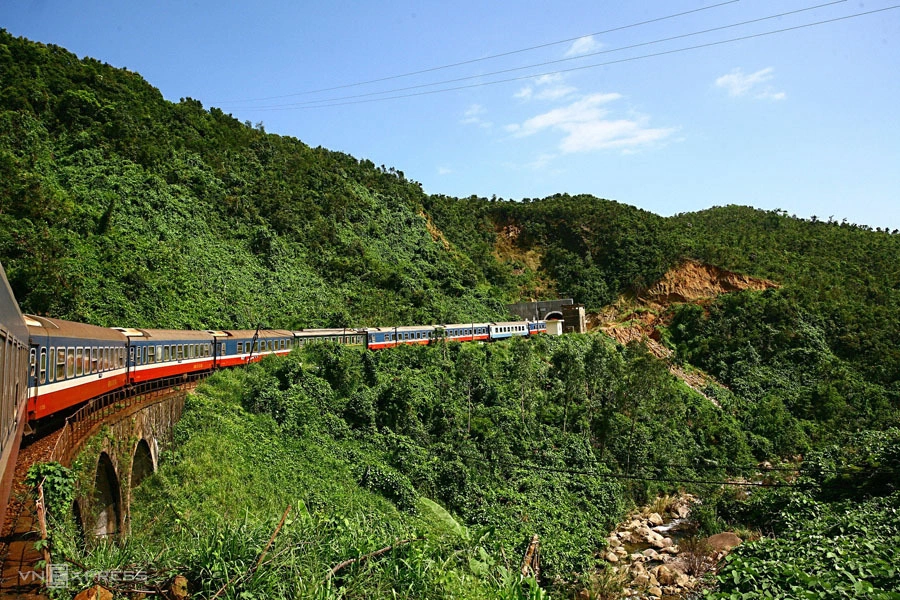
If you have more time, you can take the train to enjoy the scenic views along the way, especially the Hai Van Pass section when coming from the north. Train tickets from Hanoi or Ho Chi Minh City to Da Nang range from around 600,000 VND to 1,100,000 VND one way, depending on whether you choose a soft seat with air conditioning or a four-berth sleeper cabin with air conditioning. The journey takes about 17 to 18 hours.
If you plan to drive your own car, you should allow at least a week for a Da Nang trip and have two drivers to take turns. From Hanoi, it is ideal to depart around noon or early afternoon, spending one night in Nghe An. If you leave later, you can stay overnight in Thanh Hoa and continue to Da Nang the next morning. On the way back, you can stop in Quang Binh to rest and explore a bit more.
In Da Nang, it is recommended to rent a motorbike or car for flexible transportation. Renting is quite convenient, with pick-up and drop-off available at the airport or hotel. The average cost is about 100,000 VND per day for a motorbike and around 1,000,000 VND per day for a car.
Where to Go
- Son Tra Peninsula: Known as the jewel of Da Nang, the Son Tra Peninsula is home to a vast primeval forest and many beautiful beaches such as Tien Sa, Da Den, and Bai But. The winding roads of the peninsula pass by spots offering panoramic views of the city from above, including Ban Co Peak, Linh Ung Pagoda, Vong Canh House, Son Tra Lighthouse, and the “Indochina Eye” radar station. Visitors can enjoy many exciting activities here, such as snorkeling to see coral reefs, fishing with local fishermen, or admiring the city from a helicopter or from Ban Co Peak. In particular, Linh Ung Pagoda atop the hill is a must-visit. It houses the tallest statue of the Goddess of Mercy (Quan The Am) in Vietnam, facing the sea. Inside the statue are 17 floors, each with 21 Buddha statues in different shapes, poses, and expressions.

- Tien Stream: Tien Stream is one of the major streams originating from the peak of Son Tra, a destination as enchanting as a fairyland, featuring cascading white waterfalls, uniquely shaped rock formations, and blooming wildflowers filling the air with fragrant scents. Visiting Tien Stream allows you to fully immerse yourself in the vibrant and stunning natural beauty.

- Ba Na Hills: This tourist destination is about 40 km from Da Nang. Visitors can experience cool air and four seasons in a single day while exploring highlights such as Linh Ung Pagoda, Debay Wine Cellar, Le Jardin D’Amour Flower Garden, and the Golden Bridge. Spending the night in the French Village is also an exciting experience for those visiting Ba Na Hills.

- Heaven’s Well: Located within the Ba Na – Nui Chua Nature Reserve, Heaven’s Well offers pristine scenery that inspires adventure seekers, with activities such as trekking, mountain climbing, camping, and stream bathing. Starting from the parking lot of the Ba Na cable car area, explorers must conquer a 7.5 km winding mountain road, crossing streams and forested paths. Once the first steep slope is passed, the remaining route is much easier, making this place feel like a secluded retreat. Two streams from the western part of the Ba Na forest converge in a canyon before flowing downward.

-
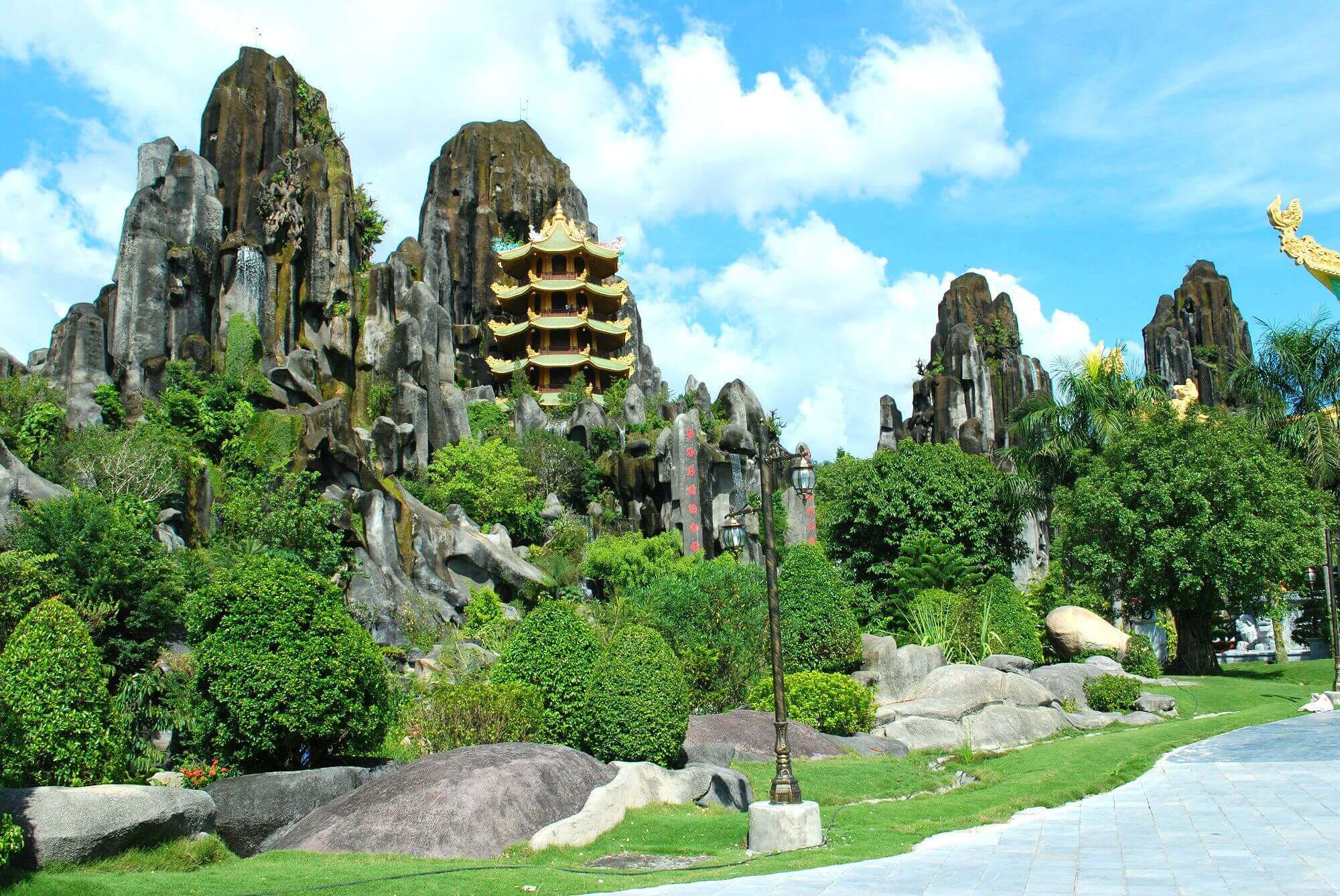
Marble Mountains: Located 8 km from the center of Da Nang, the Marble Mountains are home to many sacred pagodas and a system of natural caves. Along the scenic coastal road stretching toward Hoi An, visitors are greeted by the massive “miniature mountains” known as the Marble Mountains. Named according to the five elements—Kim Son (Metal), Moc Son (Wood), Thuy Son (Water), Hoa Son (Fire), and Tho Son (Earth)—each mountain carries its own legendary stories and unique mystical beauty.
-
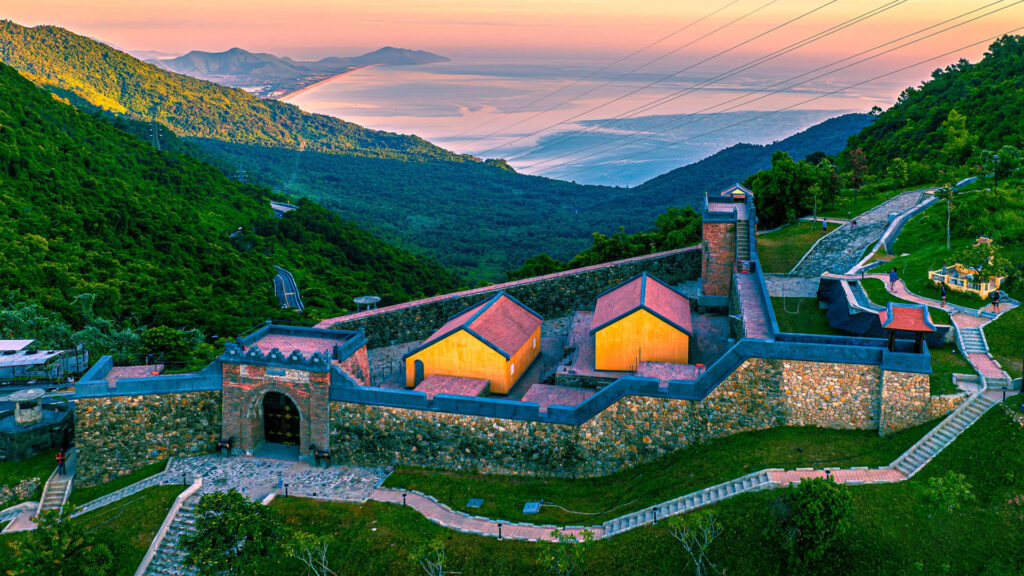
Hai Van Pass: Hai Van Pass is about an hour’s ride by motorbike from the center of Da Nang. The pass stretches 21 km, with its highest point at 496 meters above sea level. “Hai Van” means “sea of clouds.” This route was once described by Jeremy Clarkson, host of the British reality show Top Gear, as “one of the most beautiful coastal roads in the world.”
- Nam O Reef: Located about 17 km from the city center, Nam O Reef is in Hoa Hiep Nam Ward, Lien Chieu District, Da Nang. The name “Nam O” refers to the southern gate of Dai Viet over 700 years ago. This area is densely populated, with most residents working in fishing and net-making. Nam O is also famous for its traditional firecracker and fish sauce production. This is a long stretch of rocks with strange, unique shapes covered in green moss along the shoreline. Sunset and sunrise are the most popular times for visitors to come to the rocky area to capture perfect photos. The region is also known for its local specialties, including Nam O fish salad and the famous Nam O fish sauce, passed down through many generations of the coastal village.

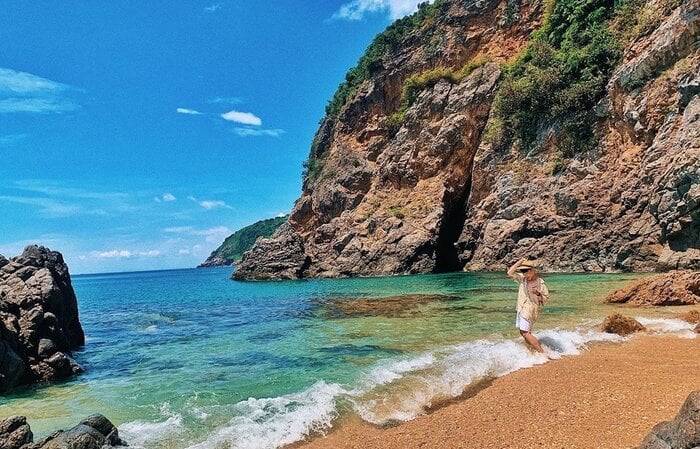
- Bang Rock Formation: Bang Rock Formation has become a popular destination among Da Nang backpackers over the past three years. It is located on the Son Tra Peninsula, about 15 km from the city center along Hoang Sa Road. Bang Rock, together with Mui Sung, Mui Nghe, Vang Beach, and Da Den Beach, creates natural landscapes that attract visitors to explore. Stretching about 2 km along the coast, Bang Rock features flat sandy areas, large and small rocks jutting into the sea, and coral patches. Visitors often bring firewood, light meals, and drinks for day trips, camping, or picnics.
Experiences
- Helicopter and Small Plane Tours: Helicopters depart from Nuoc Man Airport and first circle above the Marble Mountains for a bird’s-eye view. The flight then loops back toward the Dragon Bridge and along the Han River, allowing passengers to see the Han River Bridge, Thuan Phuoc Bridge, and the city’s impressive high-rise architecture. Over the Son Tra Peninsula, the helicopter circles out to the sea, offering a view of the largest Quan Am Buddha statue in Vietnam, before flying along Da Nang’s beaches and returning to Nuoc Man Airport.
- Surfing and Stand-Up Paddleboarding (SUP): You can sign up for surfing or stand-up paddleboarding (SUP) lessons at the Da Nang Surf School on My Khe Beach. This is the first school in Vietnam with instructors certified by the International Surfing Association (ISA). Be sure to bring swimwear and sunscreen. The SUP class, in particular, is suitable for people of many fitness levels.
- Han River Cruise: Boats take visitors from the tourist pier along the Han River, offering views of the city center at night and the chance to admire Da Nang’s unique bridges. Onboard services include dining and live music, depending on the guests’ preferences. Some tours provide sightseeing, dinner, and watching the Dragon Bridge breathe fire, with ticket prices ranging from 150,000 to 500,000 VND per person.
- Nightlife: Da Nang at night is cool and comfortable, even in the middle of summer. Stepping outside for some fresh air, you won’t feel any stifling heat. The city is also not too noisy or crowded. The locals are gentle and friendly. Restaurants, cafes, and bars stay open late, making it convenient for visitors to enjoy late-night meals or sip coffee.
Specialties
- Mi Quang: Mi Quang does not have a fixed recipe and comes in a variety of flavors, such as shrimp and pork, snakehead fish, or crab cake Mi Quang. It is a dry noodle dish, and a bowl is never complete without roasted peanuts and crispy sesame rice crackers. If you visit Da Nang on the first day of the lunar month, it can be difficult to find a meat version. Instead, you will find vegetarian Mi Quang made mainly from tofu, mushrooms, and various root vegetables.
- Pork Rice Paper Rolls: This is a fairly simple dish, but the careful selection of ingredients is what makes it special. Only the pork from the hind leg or shoulder is used, and the accompanying vegetables must be fresh and green, such as lettuce, Thai basil, fish mint, banana flower, cucumber, green banana, and bean sprouts. The dipping sauce, mam nem, is indispensable for pork rice paper rolls. A serving of this dish costs around 50,000 to 200,000 VND.
- Nam O Fish Salad: The fish used for this dish can be sardines, anchovies, or small mackerel, but the best choice is still herring. What makes Nam O fish salad unique is the dipping sauce, made from boiled fish extract mixed with Nam O fish sauce, chili, tapioca starch, and MSG. In addition to the usual accompanying vegetables, Nam O fish salad may include wild starfruit, lanh nhanh leaves, tram leaves, and orchid hearts, which only grow around Hai Van Pass. Visitors can eat the fish with various herbs wrapped in rice paper, or simply mix the fish with the vegetables and dipping sauce. There is also a wet version, where the fresh, sweet fish is marinated in a spicy, flavorful broth made from the famous Nam O fish sauce. A serving of Nam O fish salad costs around 80,000 VND, enough for two people.
- Mixed Jackfruit Salad: Mixed jackfruit salad is a favorite snack for many people. The main ingredients are young jackfruit, pork skin, and dried beef, mixed with peanuts and eaten by scooping onto pieces of rice paper. This dish is mostly found in the “snack village” on Bui Thi Xuan Street near the foot of Tran Thi Ly Bridge, or at Ba Gia’s mixed jackfruit stall in an alley on Ly Thai To Street—it has no sign but is always crowded. If you are a tourist, it’s best to arrive before 5 PM to get a seat and fully enjoy the dish.
What to Buy as Souvenirs
Tré Ong Chanh, Tré Ba De, Cam Le sesame rice crackers, My Khe seaweed, Nam O fish sauce, fresh or dried seafood such as dried squid or fish are some of Da Nang’s famous specialties, easy to find and pack for travel.
For souvenirs, you can choose silk paintings, embroidered or oil paintings, decorative items made of stone, ceramics, or wood, or handcrafted stone artworks from the Marble Mountains, as well as clothing made from silk and satin.